Journal
Dandruff & Scalp Care in Hyderabad: Stop Flakes, Itch & Hair Fall Triggers
Flakes and itch are often dandruff or seborrhoeic dermatitis, not pattern baldness. Learn when a medicated shampoo is enough and when to see a dermatologist.
 Dr. S. Madhuri4 min read
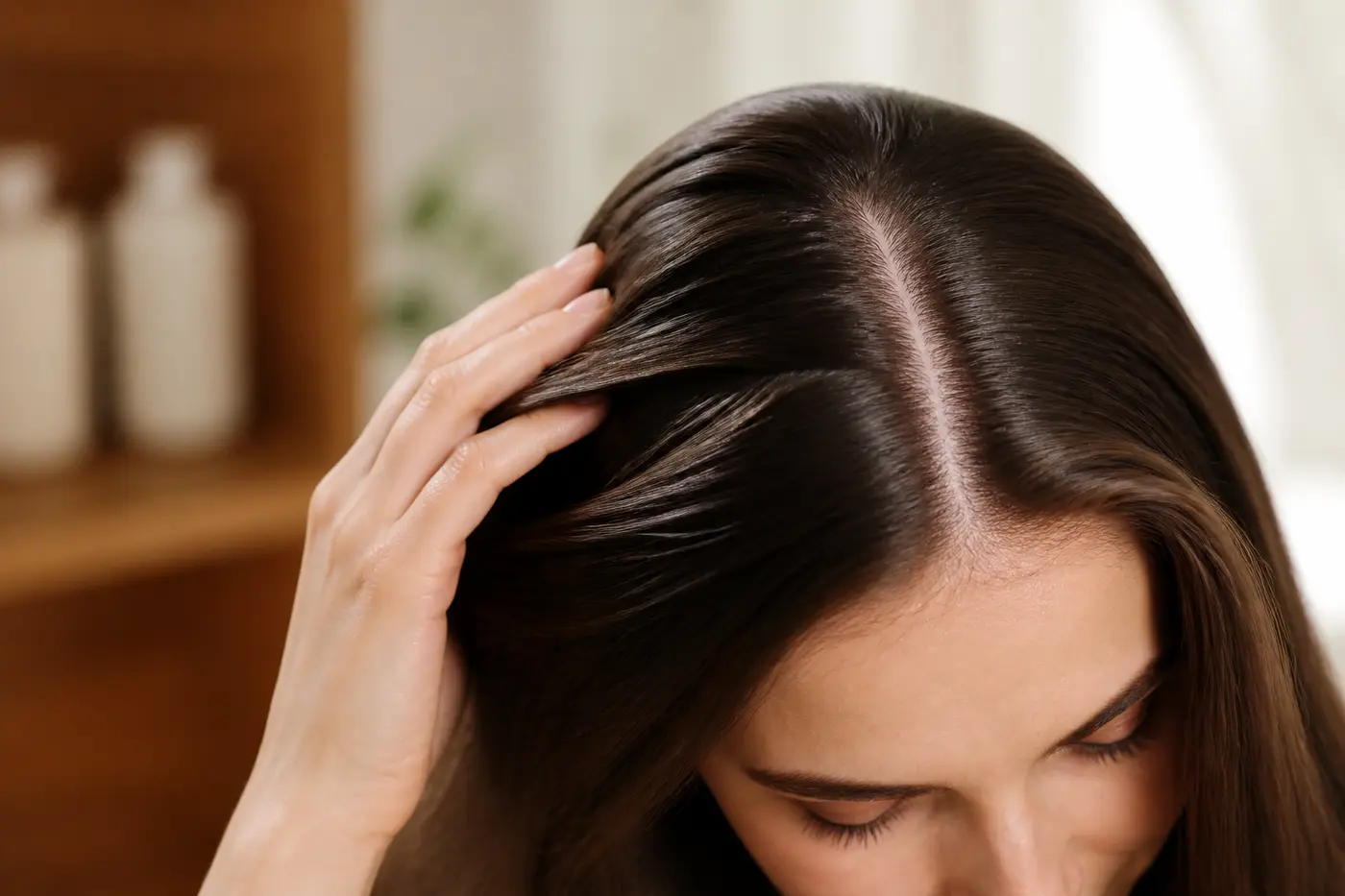
White dust on a dark shirt, an itchy hairline, and hair in the shower drain often arrive as one complaint. They are not one disease. Dandruff and seborrhoeic dermatitis affect the scalp surface. Pattern hair loss changes hair density over time. Treating flakes with a hair-growth procedure, or treating balding with an anti-dandruff shampoo alone, wastes months.
This guide separates those problems and explains everyday scalp care in Hyderabad’s heat and humidity. It is education, not a personal prescription.
Dandruff is a scalp condition
Common dandruff shows as fine white or yellow flakes with itch, often along the sides of the scalp, brows, or around the nose as well. Seborrhoeic dermatitis is the related inflammatory pattern: redder skin, greasier scale, and more discomfort. A yeast that normally lives on skin, Malassezia, plays a role, along with oil and individual sensitivity. It is not poor hygiene. Scrubbing harder usually makes the barrier angrier and the itch louder.
Other conditions mimic flakes. Scalp psoriasis has thicker, silvery scale and may mark elbows or nails. Fungal infection of the scalp, more often discussed in children, can cause broken hairs and patches of loss. Eczema, contact allergy to hair dye, and product buildup can all shed scale. Pattern hair loss, by contrast, shows a widening part or a receding hairline with thinner hairs, and the scalp between them can look quiet. You can have dandruff and pattern loss together. One does not prove the other.
What you can do with a medicated shampoo
When the picture is straightforward dandruff, dermatologists often start with a medicated shampoo used as directed, not a drop on the ends of the hair. The lather needs contact time on the scalp, commonly a few minutes, before rinsing. Ingredients you may be offered or may find in pharmacy shampoos include ketoconazole, zinc pyrithione, selenium sulfide, ciclopirox, and sometimes salicylic acid or coal tar for thicker scale. Rotating two types can help if one loses effect, but stacking five products in one shower only dries the skin.
Helpful habits around that treatment:
- Wash after heavy sweat from helmets, gyms, or long commutes, using a gentle non-medicated cleanser on off days if your scalp feels stripped
- Keep oils and overnight packs off an already flaky, itchy scalp unless a doctor has asked for a specific oil
- Rinse styling products from the scalp, not only the lengths
- Avoid sharing combs if there is an open, crusted infection
- Do not pick scale until it bleeds; that invites more inflammation
Home remedies such as undiluted lemon, garlic, or strong essential oils sting and can trigger contact dermatitis. A short course of the right shampoo is dull and usually more effective.
When a dermatologist should look
Book a review if flakes persist after several weeks of correct shampoo use, if there is thick scale, pain, pus, or swollen glands, or if hair is breaking in patches. Sudden shedding after illness, childbirth, or a high fever is a different pattern called telogen effluvium and needs history-taking, not a new oil. Women with widening parts, irregular cycles, or other hormone symptoms may need an examination and, when relevant, blood tests. Children with bald, scaly patches should be seen rather than treated with an adult cosmetic serum.
Allergy to hair colour is an emergency-style skin problem when the face swells. Stop the dye and seek care. Do not “seal” a weeping scalp with a heavy cream from a fairness counter.
At AB Skin Clinic, that examination happens in person at KPHB or Manikonda. Dr. S. Madhuri is a dermatologist (MBBS, MD DVL, DNB DVL) with a Fellowship in Dermatosurgery and Lasers. She can tell scalp disease from hair-shaft breakage and from inherited thinning.
Where hair procedures fit
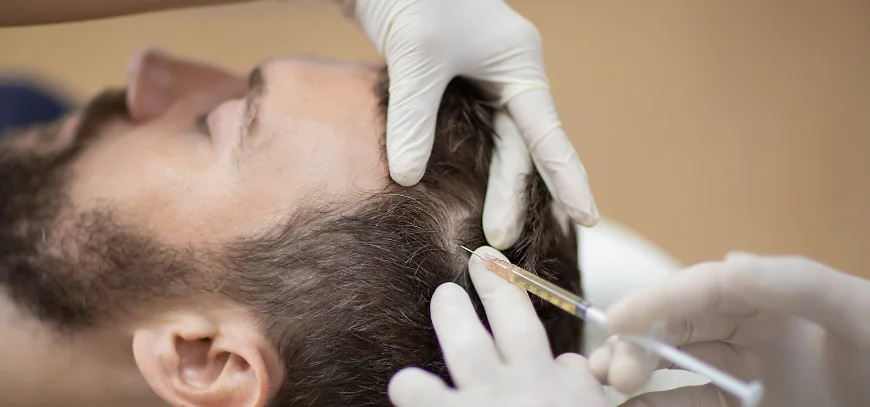
Procedures aimed at hair density, including platelet-rich plasma discussed on the PRP for hair page, are considered only after scalp disease is addressed. PRP is not a treatment for dandruff. Injecting or stimulating a scalp that is still inflamed, infected, or coated in untreated scale is poor sequencing. Clear the itch and the diagnosis first. If pattern thinning remains once the scalp is calm, a separate conversation about medical therapy, and only then about procedures, is appropriate.
Cosmetic smoothing, keratin treatments, and frequent heat can dry lengths and mimic “hair fall” when the bulb is fine and the fibre is snapping. A dermatologist looks at the bulb and the scalp, not only the bathroom floor.
A simple standard while you wait for a visit
Use one medicated shampoo exactly as the label or your doctor says, keep the rest of the routine short, and protect the scalp from constant occlusive oil. Note what you have already tried so the visit does not restart from zero. You can book an appointment or read about Dr. Madhuri on the doctor page. If itch and scale are also on the body folds after the rains, that may be a different infection; the post-monsoon fungal infection note explains why those rashes need their own diagnosis.
This article is general education from AB Skin Clinic. It is not a diagnosis or a treatment plan. Suitability is decided in a consultation.
 Related treatmentPRP for Hair in HyderabadView treatment