Journal
Freckle Removal in Hyderabad: Safe Options, Results & Sun Protection Tips
Freckles, sun spots, and melasma are not the same. See how Hyderabad dermatologists assess brown marks and why sunscreen decides how long results last.
 Dr. S. Madhuri4 min read

Brown marks on the face are often grouped together as “freckles” in everyday speech. In clinic they are not one condition. True freckles, sun lentigines, melasma, and marks left after acne or a rash can look similar in a mirror and need different care. Treating the wrong one is a common reason a cream or a laser disappoints.
This guide explains how dermatologists in Hyderabad think about freckle-type pigmentation. It does not replace an examination, and it does not promise that every mark can be cleared.
What people call freckles
Classic freckles, or ephelides, are small flat tan spots that darken with sun and often fade a little in lower light seasons. They have a genetic tendency and usually begin early in life. They are harmless in themselves.
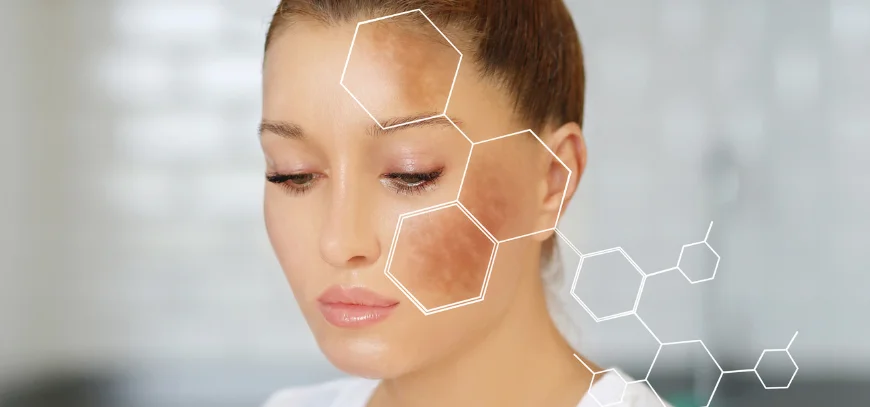
Sun lentigines, sometimes called age spots or sun spots, are also flat and brown, but they tend to stay even when you are indoors for weeks. They reflect cumulative sun, not only a recent beach day. Melasma is usually a broader, symmetrical patch on the cheeks, forehead, or upper lip, and it is strongly influenced by sun, hormones, and heat. A dark mark after a pimple is post-inflammatory pigmentation. Each of these can sit on the same face.
Because of that overlap, “freckle removal” should start with a diagnosis. A spot that is raised, changing, bleeding, or different from its neighbours is not a cosmetic freckle until a doctor has said so. Do not scrape or bleach it at home while you wait.
What treatment can and cannot do
Freckles are a response to light in skin that is built to freckle. Lightening procedures can fade contrast. They do not switch off the tendency. Without daily sun protection, new spots and darkened old ones are expected, especially in Hyderabad, where outdoor exposure is routine even on cloudy days.
Options a dermatologist may discuss on the freckle removal page, after seeing you, include:
- Strict photoprotection as the base of every plan
- Prescription creams used for a set period, not borrowed tubes
- Selected chemical peels when the skin barrier is calm
- Laser or light devices for certain flat lentigines, with settings chosen for your skin tone
Creams that helped a relative may be the wrong strength, or the wrong diagnosis, for you. Combination bleaching creams used for months without review can irritate skin and sometimes worsen pigment. Steroid-containing fairness creams are a particular problem: early brightness can be followed by thinning skin, acne, and rebound darkness.
Lasers are not a shortcut around sunscreen. On melanin-rich skin, energy that is too aggressive can leave lighter or darker patches. A test spot and a realistic session plan matter more than a device name on a poster.
Sun protection that fits this city
Sunscreen is the treatment you repeat every day. Choose a broad-spectrum product you will actually wear under humid weather and office air conditioning. Makeup with SPF is an extra, not the only layer, because most people apply too little of it.
Practical habits that support any procedure:
- Apply sunscreen on the face, ears, neck, and back of the hands before leaving home
- Reapply if you are outside for long stretches, including weddings, site visits, and school runs
- Use shade, a cap, or an umbrella between 10 am and 4 pm when you can
- Do not pick at peeling skin after a procedure; raw skin repigments easily
- Skip lemon juice, toothpaste, and undiluted essential oils on spots
Visible light also matters for some pigment problems, particularly melasma. A dermatologist may suggest an iron-oxide tinted sunscreen for that reason. It is one tool, not a cure.
Heat can darken melasma even when you are careful with ultraviolet light. Steam rooms, very hot kitchens, and long two-wheeler rides in peak summer are worth mentioning at your visit so the plan matches your week.
Results, in plain language
Flat freckles may look lighter after a well chosen plan. They often return, in some degree, if sun exposure returns. Lentigines can respond, yet surrounding skin must be protected so the contrast does not simply shift. Melasma is a chronic condition for many people: the goal is control and fewer flares, not a single permanent erasure. Acne marks fade on their own timeline and should not be lasered while the pimple underneath is still active.
Photographs taken in different rooms will not match. Judge progress in the same light, and give the plan weeks, not days. If a treatment burns more than you were told to expect, pause home products and contact the clinic rather than adding a soothing oil that can clog or stain.
When to book
See a dermatologist if marks are new in adulthood, uneven in colour, spreading quickly, or sitting with itch or a change in the surface. Also book if you are pregnant or planning pregnancy, because some pigment medicines are avoided then.
Dr. S. Madhuri consults at AB Skin Clinic’s KPHB and Manikonda locations. She is an MBBS, MD DVL, DNB DVL dermatologist with a Fellowship in Dermatosurgery and Lasers. You can book an appointment or read her profile on the doctor page. If dullness and patchy tone are the main issues rather than distinct freckles, laser toning describes a different conversation you may have at the same visit.
This article is general education from AB Skin Clinic. It is not a diagnosis or a treatment plan. Suitability is decided in a consultation.
 Related treatmentFreckle Removal in HyderabadView treatment