
Overview
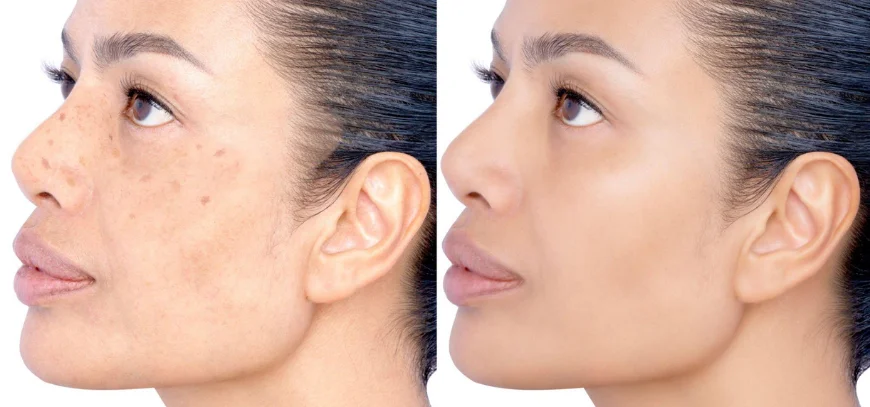
Pigmentation reduction laser is listed by AB Skin Clinic among its laser treatments for people troubled by dark patches. In dermatology the first task is to name the patch. A sun lentigo, a freckle, melasma, and a mark left by a pimple can share a brown colour and still need different care. Laser light, when it is used, is chosen to affect excess melanin. It is not a bleach for the whole face, and it is not the automatic first step for every dark area.
Melasma and many other pigment problems relapse when skin meets sun or when hormones shift. This page is educational. Only an examination can say whether laser belongs in your plan.
Concerns this visit may address
Patients often arrive with a phrase rather than a diagnosis. The visit sorts those phrases.
- Symmetric brown patches on the cheeks, nose, or upper lip suggestive of melasma
- Smaller sun-related spots on the face, hands, or chest
- Flat marks that remained after acne, bites, or a rash
- A single patch that needs to be identified before anyone treats the colour
Freckles are a related but distinct conversation, covered under freckle removal. Broad uneven tone is discussed on the skin lightening laser page. You may be directed to creams, a peel, or observation instead of any of these.
Who may benefit from an evaluation
Seek an assessment if a patch is new, spreading, darker than the rest of the face, or affecting how you choose sunscreen and makeup. The visit is also appropriate when a previous peel or laser made colour worse, because that history changes the risk.
Pregnancy, a deep tan, active skin infection, and an undiagnosed changing mole are reasons to pause cosmetic laser. Request a consultation rather than treating a new spot with a home acid while you wait.
Possible contributing factors
Light and heat
Ultraviolet radiation stimulates melanin. Across years in a sunny city, driving, sport, and courtyard time matter as much as holidays. Some people with melasma also darken with heat and visible light. A sunscreen used only at the beach leaves weekday exposure untouched.
Hormones, inflammation, and medicines
Pregnancy, contraception, and other hormonal medicines are well-known melasma associations. Acne, eczema, waxing, or harsh cosmetics can leave pigment that outlasts the original spot. Colour in the dermis is harder to reach than colour in the epidermis. This page cannot tell you which layer you have.
How a dermatologist evaluates the concern
The dermatologist inspects borders, symmetry, and surface. Melasma tends to be blotchy and facial. Lentigines are often sharper. Post-inflammatory marks sit where a spot or scratch used to be. Dermoscopy, and sometimes a Wood’s lamp, helps judge depth and flags lesions that should not be lasered. A changing, irregular, or solitary lesion may need monitoring or a biopsy rather than pigment “reduction.”
Treatment approaches that may be discussed
General dermatology uses a ladder. Laser is not always on the first rung, especially for melasma.
- Broad-spectrum sunscreen, reapplied, and practical shade
- Topical therapy suited to the diagnosis, the skin’s tolerance, and pregnancy plans
- Chemical peels for some epidermal pigment
- Laser toning or another pigment laser when the lesion type and season allow
- Stopping irritants and steroid fairness creams that are feeding the colour
- Review or biopsy if the spot is not clearly benign
The clinic states that its lasers are USFDA-approved equipment. That sentence is the clinic’s claim about devices. It is not an external certificate reproduced here, and it does not mean laser is indicated for your patch.
How the treatment works
Light taken up by melanin
Wavelengths used for brown marks are absorbed by melanin when settings are disciplined. Very short pulses can fragment pigment so the body clears it gradually. Other low-energy approaches try to soften contrast without an open wound. You may feel a snap and see brief greying of a spot.
Why one course is not a switch
Melanocytes are not removed as a population, so they can make pigment again. Deep colour may lighten only partly. If the laser inflames the skin, new pigment can form and the patch darkens, which is a particular risk in melasma and in skin that marks easily. A sun spot on the hand is a different task from long-standing cheek melasma.
What happens during a consultation or procedure
Consultation time is spent on diagnosis and on whether to delay. If a procedure is agreed, the skin is photographed, cleaned, and shielded at the eyes. A test spot is common when the risk of darkening is real. Pulses treat the marked areas rather than the whole face unless a full-field plan was specifically chosen.
Preparation guidance
- Use the sunscreen you were advised, and do not arrive freshly sunburned
- Pause scrubs, home peels, and bleaching kits unless a prescribed cream is meant to continue
- List contraceptives, antibiotics, and herbal products that coincided with a flare
- Mention pregnancy and breastfeeding without waiting to be asked
- Bring prior biopsy reports or old photographs if a lesion was already assessed
- Reschedule for a cold sore, a boil, or a peel done elsewhere in recent days
Tell the clinic if you tan easily or if a previous laser left a brown imprint. That detail changes settings or cancels the session.
Aftercare and recovery
Clean the skin gently and moisturise if it feels dry. Use a broad-spectrum sunscreen every morning and reapply through outdoor time in Hyderabad. A hat and shade at midday are part of recovery, not optional extras. Avoid hot saunas, strong retinoids, and waxing on the area until you are cleared.
Risks, limitations, and realistic expectations
Ordinary effects include redness, swelling, temporary darkening, and mild discomfort. Less common events are burns, blisters, infection, scarring, cold sores, long-lasting hyperpigmentation, and hypopigmentation. The last of these can be more visible than the original mark. Melasma can rebound above its starting colour if heat and inflammation are excessive. Eye protection is not negotiable.
What influences suitability and results
The diagnosis and the depth of colour dominate. Epidermal lentigines and deep dermal pigment should not be spoken about as if they were the same job. Skin tone, a current tan, hormonal status, and outdoor work shift the risk.
Prior worsening, steroid cream use, and a crowded routine of acids make prediction harder. Maintenance sunscreen is part of the outcome measure. The pigmentation guide lists practical questions. It does not identify your lesion.
Why professional dermatology guidance matters
Brown colour is not a sufficient reason to fire a laser. Some lesions need a biopsy. Some pigment is safer left alone or treated with a cream. A dermatologist is also the person who should notice when “pigmentation” is actually melasma that has been irritated by a previous salon peel.
Why consider AB Skin Clinic
AB Skin Clinic in Hyderabad was founded by Dr. S. Madhuri, who is Chief Dermatologist. Published qualifications are MBBS (ASRAM Medical College, Eluru), MD DVL (Guntur Medical College), DNB DVL, and a Fellowship in Dermatosurgery and Lasers. The clinic describes about ten years of dermatology work, including time as a consultant at Apollo Hospital, Secunderabad. KPHB is at 1st floor, Triveni Towers, MIG-154, Road No. 1, Kukatpally Housing Board Colony, Hyderabad 500072, phone 94949 46701. Manikonda and Alkapuri is Second Floor, Sy No 140, BLOCK-A, Plot No 14, above HDFC Bank ATM, near Neknampur, Gandipet 500089, phone 98489 99917. Email abskinandneurocentre@gmail.com. Hours are Monday to Saturday, 10:00 am to 1:00 pm and 6:00 pm to 8:30 pm, and Sunday is closed.