
Overview
Tattoo removal is gradual laser lightening of unwanted ink, with care between sittings. Professional tattoos place dense pigment at an even depth. Amateur ink may sit unevenly and was sometimes never meant for skin. Dr. S. Madhuri reviews the tattoo, the surrounding skin, and your history first. Older website links sometimes used the spelling “tatto-removal”; the service is tattoo removal. The clinic states that USFDA-approved lasers are used. Several sessions are usual, and full clearance is not guaranteed for every colour.
Concerns this visit may address
People come for a name or symbol they no longer want, for blurred ink, or for a design that limits clothing. Others are advised to lighten an old tattoo before a cover-up. Amateur marks and small traumatic tattoos are also reasonable reasons to attend. Cosmetic ink on eyebrows, the lip line, or eyeliner needs extra caution, because some pale or flesh-toned pigments can darken. A dark ring, pale patch, or texture change after treatment elsewhere should be reviewed before further laser.
Who may benefit from an evaluation
You may benefit if the tattoo is healed and you can attend visits spaced weeks apart. Black ink and green, blue, or yellow ink are compared in clinic, as is pigment risk on a darker skin tone. Leaving the tattoo, treating only part of it, or pausing for a cover-up are valid results. Delay is wiser if the skin is tanned, infected, or recently scarred, or if you are pregnant. Keloid history and isotretinoin use should be raised before a date is set.
Possible contributing factors
Professional pigments vary, and the recipe is often unknown years later. Amateur ink may include carbon or pen ink at irregular depth. Road-grit tattoos differ from decorative ink. Cover-ups, partial removal, and tattoo age change how much pigment remains. Darker skin holds more melanin, so light aimed at ink can affect normal colour. Smoking, sun on a fresh sitting, and picked scabs raise the chance of texture change. Mention a tattoo that has itched or stayed raised for years.
How a dermatologist evaluates the concern
The dermatologist records colours, density, scar inside the tattoo, and any infection or keloid. You will be asked if placement was professional or amateur, and if white or skin-coloured ink was mixed in. A test spot is sometimes offered before a full sitting, especially for cosmetic or unusual colours. History covers medicines, pregnancy, and healing. Ink is distinguished from a mole beside the tattoo, and that mark is diagnosed before cosmetic lightening. Laser treatments are chosen after this examination.
Treatment approaches that may be discussed
Laser is the main method discussed for decorative tattoos. Different wavelengths are considered because black, red, green, and blue inks do not absorb light equally. Excision is occasionally discussed for a very small tattoo if a line scar is acceptable. It is not the default for a large design. Creams that claim to dissolve ink are not a substitute. Sessions are spaced by weeks so fragmented pigment can clear. Mole removal for a separate lesion is its own decision. Tattoo laser is not a mole treatment.
How the treatment works
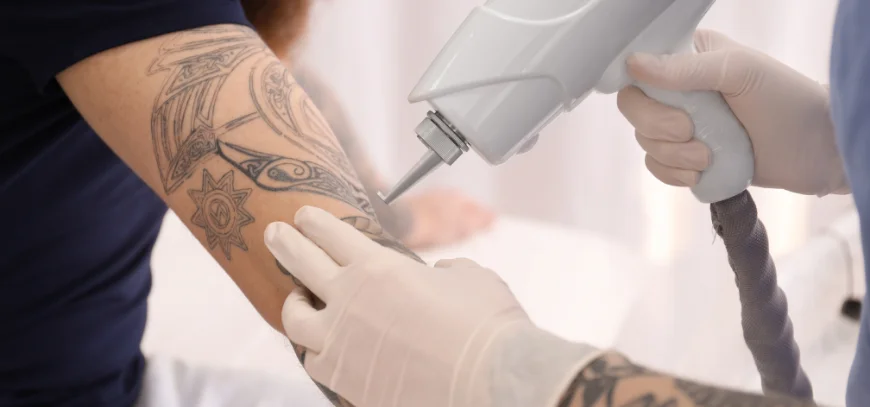
Short-pulsed medical lasers release energy that tattoo particles absorb. Ink breaks into smaller fragments, and immune cells carry some debris away over the following weeks. The design can look little changed on the day and lighter a month later. The surface is meant to stay largely intact, though whitening, swelling, or pinpoint bleeding can occur. Your own melanin competes for some of that energy, so a suntan is a reason to wait. Some white and cosmetic mixtures darken instead of fading. A friend’s session count is a poor guide.
What happens during a consultation or procedure
Consultation includes examination, photographs, and a course discussed without a promise of total clearance. If you proceed, the skin is cleansed, the eyes are shielded, and the laser is passed across the ink. A dressing is placed if the surface is weepy. You go home the same day knowing what frosting, swelling, and blisters can look like. A review comes before the next session. Book an appointment at the site you can attend repeatedly.
Preparation guidance
Do not arrive with a fresh tan over the tattoo. Pause harsh scrubs and retinoids on the area if asked, and do not wax immediately beforehand. Wear clothing that allows a dressing, and bring medicines, including blood thinners and isotretinoin. Say if the tattoo is only weeks old, infected, or cosmetic ink on the face, and say if you are pregnant or breastfeeding. Hours are Monday to Saturday, 10:00 am–1:00 pm and 6:00 pm–8:30 pm; Sunday is closed.
Aftercare and recovery
Keep the area clean and use the ointment or plain moisturiser you were given. Leave scabs and blisters intact. Avoid swimming, saunas, and friction until the surface has settled. Sun protection lowers the chance of a dark patch. Picking crusts raises the risk of texture change and infection. Makeup on facial cosmetic ink waits until the skin has closed. Call for increasing pain, pus, or fever. The tattoo removal guide is general background; your own instruction comes first.
Risks, limitations, and realistic expectations
Multiple sessions are the norm. Greens, blues, yellows, and mixed cosmetic pigments may lighten only partly. Dark or pale patches can become more visible than leftover ink, especially on darker skin or after sun. Texture change, scarring, and less often keloid are possible. Some light-coloured inks darken. Infection is uncommon if the barrier is respected, and more likely if scabs are removed early. Ink allergy can occasionally become more noticeable as pigment breaks up. A realistic aim is progressive fading, and stopping if further sittings threaten the skin.
What influences suitability and results
Ink colour, professional versus amateur placement, layering, and tattoo age all influence results. Black and dark blue often respond more readily than pastels. That is a tendency, not a promise. Skin tone, a recent tan, and past pigment problems change the energy used. Scar inside the tattoo, smoking, and missed sun protection slow progress. Knowing whether cosmetic ink was used helps avoid a sitting that could darken the mark.
Why professional dermatology guidance matters
Tattoo laser is a medical procedure with pigment and scar risk. A dermatologist judges whether the mark is ink, selects an approach for the colours and the skin tone, and knows when to stop. That avoids treating a suntan, a suspicious lesion, or a cosmetic pigment that may darken. Acids and unregulated devices can burn the skin and leave a scar while the ink remains. Professional care includes consent, eye protection, and follow-up where the tattoo is seen in person.
Why consider AB Skin Clinic
Dr. S. Madhuri, MBBS, MD DVL, DNB DVL, Fellowship in Dermatosurgery and Lasers, founded AB Skin Clinic and has around ten years in dermatology as described by the clinic. She is listed as a consultant at Apollo Hospital, Secunderabad, a former assistant professor at ASRAM, and a former senior resident at Siddhartha Medical College. KPHB: Triveni Towers, MIG-154, 1st floor, Road No. 1, KPHB Colony, Hyderabad 500072, 94949 46701. Manikonda: Second Floor, Sy No 140, BLOCK-A, Plot No 14, above HDFC Bank ATM, Alkapuri, near Neknampur, Gandipet, Telangana 500089, 98489 99917. Hours are Monday to Saturday, 10:00 am–1:00 pm and 6:00 pm–8:30 pm; Sunday is closed. Contact the clinic to choose a site for repeated visits.